

About the Charter
The International Peace Charter (IPC)
The IPC was founded by Miles Craig, a spiritual, Canadian citizen living in Victoria, British Columbia, Canada, with a background in business and philanthropy.
Miles’ concern for wars throughout the world, in particular the wars in Ukraine and the Middle East, led to his belief that there is a critical need for a new peace organization and new international peace charter encompassing all 198 countries of the world.
We have a global war culture. Many of our leaders have a war mentality where power and control are an important part of governing. Wars and military spending are accepted by most of the citizens of the world. We have become accustomed to wars and believe them to be the norm.
The world has an overabundance of military weapons, both conventional and nuclear. The total world military expenditures in 2023 were $2.4 Trillion. The world economy is predicated on the manufacture and sale of military weapons. We are led to believe that the investment in military weapons acts as a deterrent to conflict. To the contrary, the more we spend on military, the more dangerous the world becomes.
The world has an institutional problem with the United Nations. While the UN has contributed towards peace, The UN has also fallen short. The UN has not been able to achieve its goal of world peace.
Veto power of the permanent members, US, Russia and China means that action can be blocked even when there is consensus among member states. Since the UN was formed in 1945, 80 years ago we have had over 250 wars and conflicts and 20 to 25 million deaths. The possibility of a global conflict is increasing.
The UN has not been successful in mediating wars. The most recent examples are the Ukraine War and the Gaza War.
The IPC is proposing a new international peace committee consisting of world citizens with the goal of mediating current conflicts through adherence to the principles of the International Peace Charter.
World peace requires responsible and mature leadership from the leaders of every country.
The countries of the world are lacking leadership of women. We need more women in leadership positions. Women are less likely to engage in conflict and wars.
Miles’ vision is for an international peace movement through the connective power of the internet. Approximately 70% of the Earth’s population (about 5.5 billion people), are internet users. Miles proposes that citizens of the world send messages to their leaders in support of peace and solidarity. The power of peaceful protest, and prayer cannot be underestimated. Prayer being both the oral and written intervention from God.


Wars are precipitated by an overabundance of military weapons, both conventional and nuclear. The total world military expenditures in 2023 were $2.4 trillion. Here is a brief overview of military expenditures by country:
| USA: $916 Billion* | China: $296 Billion |
| Russia: $109 Billion | India: $83.6 Billion |
| Canada: $41 Billion |
*Representing 40% of the total world military expenditures
There are misconceptions and a lack of education about the benefits of military expenditures. Increased military spending makes the world more dangers, not less dangerous. Restraint in military expenditures is essential for world peace.
Our History of Wars
World War I, often called the “Great War,” lasted from 1914 to 1918 and was one of the deadliest conflicts in history. It was primarily fought in Europe but had global implications. In 1914, with the invasion of Belgium, the world was set on edge. Finally in 1918, Armistice was achieved. There were 16 million killed.
1920 The League of Nations Founded to Prevent Future Wars
The League of Nations was founded in 1920 after World War I, with the ambitious goal of preventing future wars and promoting global peace. It was conceived as part of the Treaty of Versailles and heavily championed by U.S. President Woodrow Wilson, although the United States never became a member.
Goals of the League:
- Preventing War: The League sought to resolve international disputes through diplomacy and arbitration rather than violence.
- Disarmament: It aimed to reduce national armaments to prevent militarism.
Collective Security: Members pledged to protect each other against aggression. - Promoting Cooperation: It fostered collaboration on economic, social, and humanitarian issues.
The League’s aspiration to end all wars reflected the idealism of its era, but its limited powers and inability to address the root causes of conflict meant it could not fulfill this objective.
The League of Nations was established in 1920 following World War I, and it ceased to function effectively. Several conflicts occurred, including:
- Second Italo-Ethiopian War (1935–1936): Italy invaded Ethiopia, leading to a significant failure of the League of Nations, which could not prevent the aggression.
- Spanish Civil War (1936–1939): While not a formal war between nations, it involved significant international involvement, with Italy, Germany, and the Soviet Union backing different sides.
- World War II (1939–1945): The largest and most devastating conflict during this period, involving the Axis and Allied powers, ultimately demonstrated the League of Nations’ inability to maintain peace. World War II (1939–1945) resulted in an estimated 70–85 million deaths, making it the deadliest conflict in human history.
These wars highlighted the League’s weaknesses, such as its lack of enforcement power and the absence of key nations (e.g., the U.S.), leading to its replacement by the United Nations, which was designed to address these shortcomings
1945 United Nations then Founded to Maintain International Peace and Security
The United Nations was established following World War II to address the shortcomings of the League of Nations. Its purposes, outlined in the UN Charter, include:
- Maintaining international peace and security.
- Developing friendly relations among nations.
- Promoting social progress, better living standards, and human rights.
The United Nations, which is comprised of many nations, is unable to achieve it’s goals. Over 250 wars and conflicts have occurred globally since 1945, including 2 major wars currently raging.
- Korean War (1950–1953): A conflict between North Korea (supported by China and the Soviet Union) and South Korea (backed by the U.S. and UN).
- Vietnam War (1955–1975): A prolonged conflict in Vietnam, Laos, and Cambodia, pitting communist forces against South Vietnam and its U.S. allies.
- Suez Crisis (1956): A short war involving Egypt, Israel, Britain, and France over the nationalization of the Suez Canal.
- Algerian War of Independence (1954–1962): A major conflict for independence from France.
- Six-Day War (1967) and Yom Kippur War (1973): Key wars between Israel and its neighboring Arab states.
- Iran-Iraq War (1980–1988): A devastating war over territorial disputes and political differences.
- Soviet-Afghan War (1979–1989): A conflict between Afghan insurgents (supported by the U.S., Pakistan, and others) and Soviet forces.
- Gulf War (1990–1991): A U.S.-led coalition expelled Iraqi forces from Kuwait.
- Bosnian War (1992–1995): Part of the Yugoslav Wars, involving ethnic and territorial conflict in the Balkans.
- Rwandan Genocide and Civil War (1994): Ethnic violence with catastrophic loss of life.
- Iraq War (2003–2011): The U.S. invasion to remove Saddam Hussein and address alleged weapons of mass destruction.
- Afghanistan War (2001–2021): A U.S.-led coalition effort against the Taliban and al-Qaeda following the 9/11 attacks.
- Syrian Civil War (2011–present): A multifaceted conflict with regional and global powers involved.
- Russo-Ukrainian War (2014–present): Escalated significantly with Russia’s full-scale invasion in 2022.
- The Middle East (2022-present) while signs of a peace agreement are promising, peace is still fragile.
Since World War II, it is estimated that approximately 20-25 million people have died in wars and armed conflicts worldwide. These numbers include combatants and civilians killed in direct violence but exclude indirect deaths caused by war-related factors such as famine or disease.
“Wars begin in the Minds of Men”
The UNESCO Charter states, “Since wars begin in the minds of men, it is in the minds of men that the defenses of peace must be constructed.”
For over sixty years, the scientific community has issued vivid warnings about the catastrophic effects of thermonuclear war and has called for the abolition of these world-destroying weapons. Albert Einstein and Bertrand Russell mobilized the first coalition of preeminent scientists and scholars to address this existential threat.
With the shifting geopolitical landscape and the rise of terrorist nation-states, the strategy of nuclear deterrence is increasingly ineffective and outmoded. The threat of nuclear retaliation will not deter terrorist groups or suicide bombers, who are willing to sacrifice their own lives to wreak destruction upon their political and religious enemies—or terrorist organizations who possess no sovereign territory that could serve as a target for a retaliatory strike.
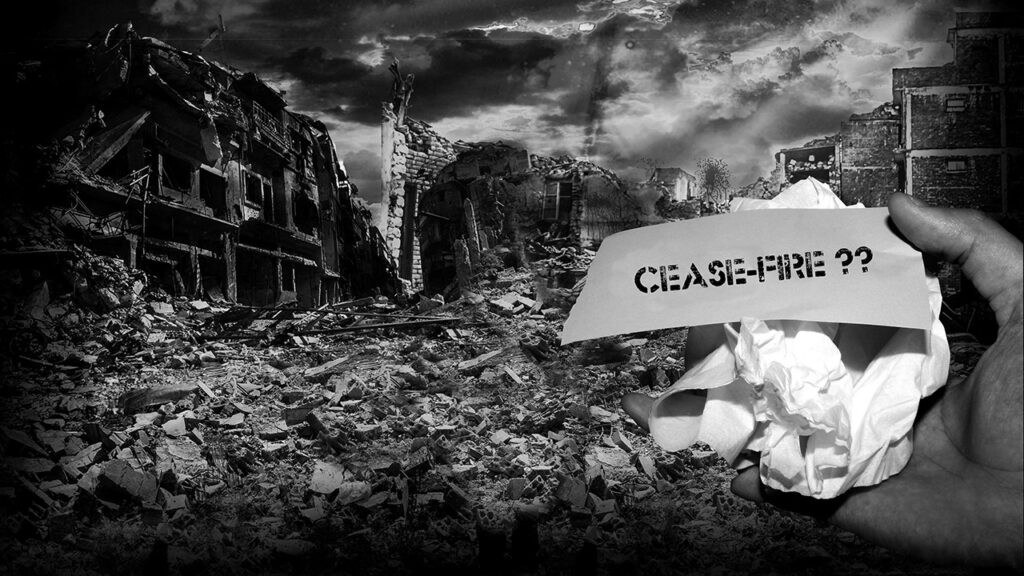
Today, every nation is vulnerable. Even the mightiest nations have fallen prey to escalating terrorist attacks. Conventional military approaches appear unsuited and unable to prevent such attacks. Diplomatic efforts face similar challenges. In a world torn by deep-seated hostilities and regional tensions, compromise and diplomatic solutions have been elusive. Hard-won negotiated settlements and ceasefires typically afford only fleeting relief. Paper treaties among rival factions have proven too fragile a basis for lasting peace.

The Founder
Miles Craig holds a Commerce Degree from the University of Manitoba. Over a 20-year period, Miles was an executive of Craig Broadcasting, a private family-owned television and radio company in Canada. Miles also held an executive position in the division, Craig Wireless Systems, which pioneered a digital wireless cable system in Manitoba and later acquired wireless spectrum licenses in countries throughout the world.
In the last 20 years, Miles has been involved in charitable work. Miles founded a poverty charity in the US and an alcohol and drug prevention charity in Victoria, Canada. Both registered charities had a national vision and national importance.
Miles considers himself to be a problem solver. He believes that while the problems of the world are complex, the solutions are simple and within our grasp. He is passionate about world peace.
As a spiritual person, he believes that world peace can be created by following the principles of the International Peace Charter, a simple and comprehensive charter.
Miles lives in Victoria, British Columbia.